Explore Florence’s Life
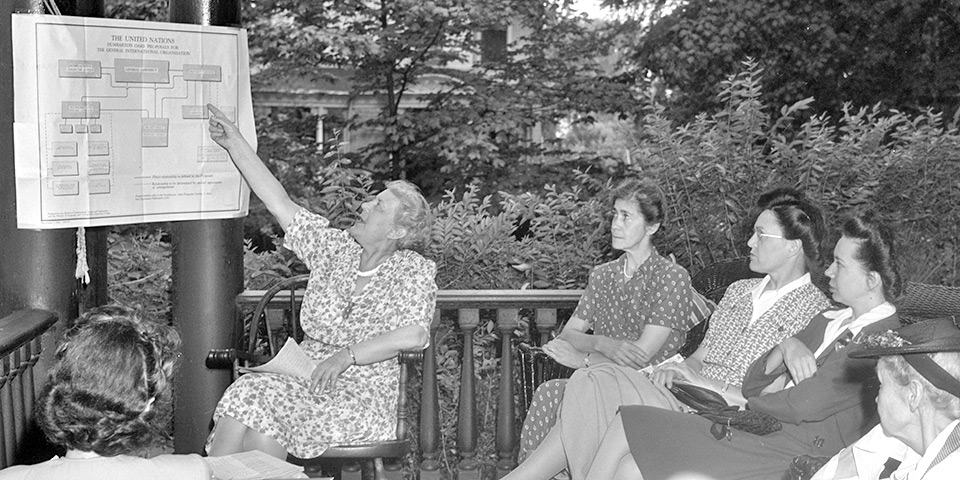
Florence Fifer Bohrer (1877-1960) grew up in the halls of power. Her father Joseph Fifer (1840-1938) was elected governor of Illinois when she was only eleven years old, prompting the family to move from their long-established home in Bloomington, Illinois into the Executive Mansion in Springfield. There, she often joined her father in his office for conversations with prominent political actors such as former governor Richard J. Oglesby, Supreme Court justice David Davis, and Illinois State Normal University founder Jesse Fell. In a 1952 interview, she recalled that as a pre-teen she also “frequently found [her] way to the State House where [she] sat in the gallery listening to debates.” 1Footnote
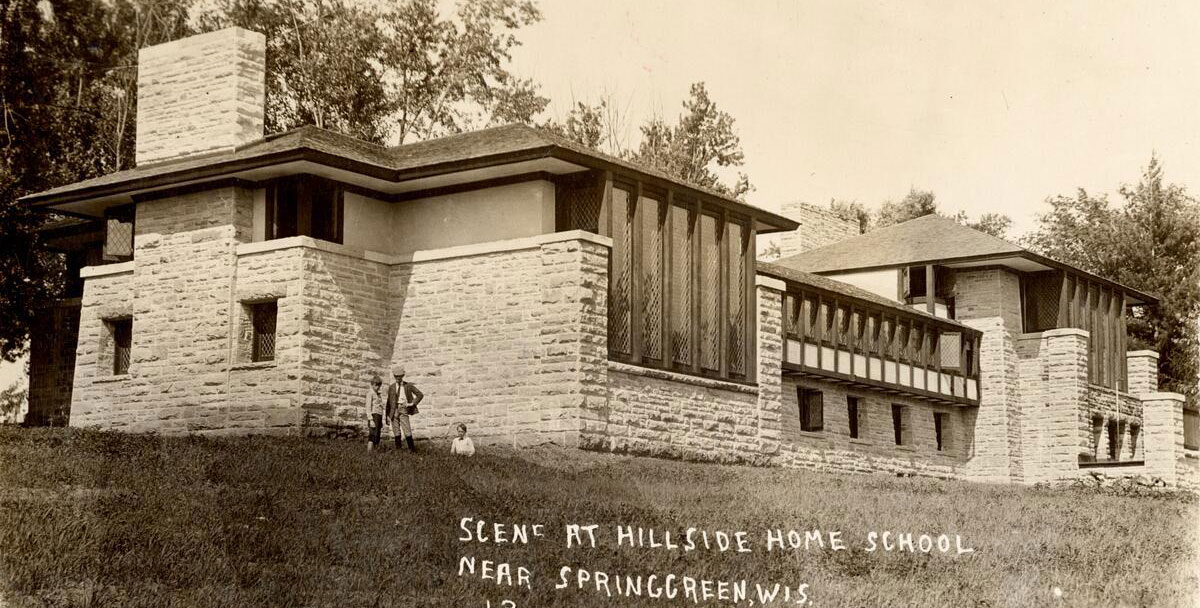
Never a diligent student in a traditional education environment, Florence had difficulty sitting still in class but finally found her stride when, at age 14, her parents enrolled her in the Hillside Home School, a progressive, experimental boarding school in rural Wisconsin. There, the founders, informally known as “Aunt Jane” and “Aunt Nell” Lloyd-Jones, patiently coaxed her into attending class by promising outdoor excursions after lessons finished for the day. Hillside only had one African American pupil during Florence’s tenure there. The daughter of the first Black attorney admitted to the Illinois Bar Association, Mabel Wheeler (1876-1935) was initially made to live with Nell and Jane’s brothers at a nearby farmhouse instead of in the Frank Lloyd Wright-designed Home Building with the rest of the pupils. When scarlet fever swept through the farmhouse, however, Florence volunteered to take her on as a roommate so she wouldn’t be sent home to Chicago; the two lived together for the rest of the year. This experience stayed with Florence for the rest of her life and informed her later commitment to racial justice. 2Footnote
After completing her schooling, Florence returned home to Bloomington and had her debutante season. Around that time, she met Jacob “Jake” Bohrer (1867-1928), a young man who split his days between teaching Latin, Greek, and German at Illinois State Normal University and studying to be a lawyer at Illinois Wesleyan University. The two were married soon after Jacob entered into law practice with Florence’s father.
By the age of 24, Florence had become a mother twice over. Her children, Joseph (1899-1993) and Gertrude (1901-1945) received much of their care from a live-in nurse and housekeeper, and Florence “sometimes got the feeling that she was not needed, even to the point of feeling incompetent to care for the children.” 3Footnote She therefore threw herself into community organizing, philanthropy, and “club work,” all popular pastimes for women of means. In addition to the Bloomington Country Club and Amateur Music Club, Florence helped to found the local Mothers’ Club, which eventually merged with the national Parent-Teacher Organization. She also served on the board of the Girls’ Industrial School (later known as the Lucy Orme Morgan Home) and helped to found the McLean County Home for Colored Children (later known as the Booker T. Washington Home). “To be a good mother and homemaker, [an intelligent woman] must push out the walls of her home to include the community,” she once told the Home Bureau of McLean County. In addition to accompanying her children to school and the playground, “she will go to city council and sometimes to the state legislature to the end that good ordinances and laws may be adopted which will provide a safe environment” for her children. 4Footnote
This conviction was tested when her daughter Gertrude contracted tuberculosis in 1910, followed swiftly by several of her classmates and one of her teachers. In response, Florence joined the leadership team of the McLean County Anti-Tuberculosis Society and began leveraging her social connections to lobby for the passage of a state law allowing counties to raise funds for the construction of tuberculosis hospitals via taxation. Her efforts contributed to the establishment of Fairview Sanitorium in 1919 and she served as the first secretary of its board.
Florence did not take an active role in the women’s suffrage movement and never publicly identified as an “ardent feminist,” though her philosophy that each individual should have the right “to develop to the best of his or her abilities” regardless of their gender would certainly strike the modern observer as a feminist principal. 5Footnote This emphasis on individuality also led her to reject the conventions of wearing wedding rings and using the title “Mrs.” for married women.
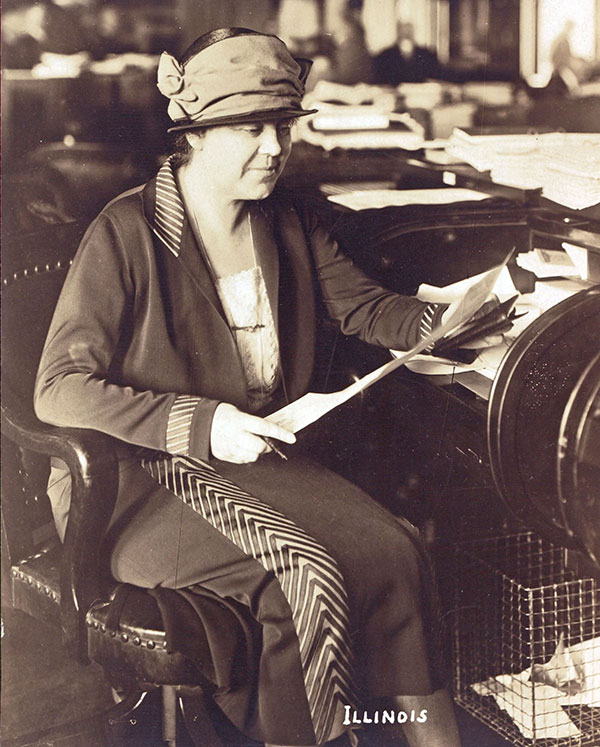
On August 18, 1920, the 19th amendment to the Constitution was ratified by the final state necessary to ensure its adoption. For the first time, all American women could legally vote, though in reality women of color were often excluded. The next state-level election in Illinois fell in 1924. On January 24 of that year – Florence’s 47th birthday – a group of Florence’s friends stopped by her home to pitch to her the idea of running for a seat in the state senate. While initially resistant to the idea, she agreed to talk it over with her family. Everyone but her father and brother immediately urged her to accept the candidacy. Eventually, her mother, who “had instilled in her the belief that she could do any job she wanted to” convinced Florence throw her hat in the ring. 6Footnote
Running as a Republican on a platform of progressive state welfare work, Prohibition enforcement, tax reform and lessening the influence of Chicago on downstate politics, Florence began leveraging her society connections and decades of community networking in pursuit of her nascent political career. After handily defeating her primary opponent, she tweaked her platform for the fall general election to focus on “Christian citizenship,” protecting agricultural interests, law enforcement, and lower taxes. Her ambitious campaign of travel and speechmaking in the tiny towns of the rural 36th district would come to define her two terms in office following her landslide victory over the Democratic nominee on November 4, 1924. When she visited her parents’ house to tell them the good news, she reportedly overhead her father exclaim to her mother, “I declare, my dear, and I didn’t think she was worth educating!” 7Footnote
Florence’s triumph came in no small part due to the efforts of the Florence Fifer Bohrer Club, a small army of approximately 175 female friends and volunteers who stumped for her across the district. Dozens of them accompanied her to Springfield in January 1925 to witness her swearing in as Illinois’ first female state senator. In return, Florence faithfully returned home at regular intervals to keep her supporters appraised of her activities in the senate.
The first piece of legislation that Florence introduced as a freshman senator came to be known as the “Dance Hall Bill.” Part of a fleet of protective social legislation put forward by the four female members of the 54th Illinois General Assembly, the bill aimed to shield rural youth from “the contaminating influences” and “commercialized vice interests” of the cities, which resulted in “roughness, drunkenness, [and] license.” 8Footnote 9Footnote It received widespread favorable press coverage and passed easily as this was exactly what Illinoisans had elected the women to do—bring their “mother’s hearts” into the halls of power.
While it is true that at least to some extent Florence viewed her political service as an extension of her responsibility as a mother, it would be a mistake to underestimate her political savvy in continuing to position herself as a sort of angel of the home in the senate chamber. Throughout her eight years in office, she continued to broaden and strengthen her legislative agenda by couching it in terms of “women’s issues.” She framed her career-long campaign to reform Illinois’ tax base by rewriting the state constitution, for example, as a bid to secure more equitable funding for education and child welfare. “Women [have] learned that every act of their lives is touched by [the] law of the land,” she said in a 1930s-era speech titled “Why women are concerned with government.” “[This is] true of home and church and school, birth to death.” Besides, she noted, “w[e] are used to watching the pennies.” 10Footnote
Florence served on 17 state senate committees during her political career, including Agriculture and Livestock; Appropriations; Charitable, Penal, and Reformatory Institutions; Civil Service; Corporations and Industrial Affairs; County and Township Organization; Drainage; Education; Efficiency and Economy; Fees and Salaries; Judiciary; Parks, Boulevards, and Playgrounds; Public Health, Hygiene, and Sanitation; Reapportionment; Roads, Highways, and Bridges; and State Universities and State Normal Schools. She also held the position of chairman of the Committee to Visit Charitable Institutions, a role that saw her briefly incarcerated in the East Moline State Hospital when an incredulous receptionist reported to a psychiatrist that “a woman who thought she was a senator” had presented herself to the front desk asking for a meal and a place to spend the night. 11Footnote
Overall, Florence proved a dynamic, effective, and “controversial” agent in the Illinois senate, as “she was always more concerned with issues than with party politics.” 12Footnote In addition to the Dance Hall Bill, she sponsored many successful pieces of legislation, including those that:
- Authorized the Department of Public Works and Buildings to establish and manage a state park system
- Made “Illinois” the official state song
- Allowed for the payment of property taxes in two annual installments
- Required the State Auditor to document the names, addresses, positions, and salaries of all state employees in an attempt to curb payroll fraud
- Created a commission to care for all disabled children in Illinois
- Authorized the Department of Public Welfare to place institutionalized children in family boarding homes
Florence also created the Chandler Committee to study existing child welfare laws and propose new legislation. Of the twenty bills that came out of this committee during her time in office, fully half were voted into law. Two that did not were the “Illegitimacy Bill,” a proposal to compel men to pay for the care and education of children they fathered out of wedlock, and the “Midwife Bill,” a proposal to provide for the medical training and licensure of midwives. She was also not successful in pushing through legislation to reduce the number of representatives from the Chicago area in state government or to regulate osteopathic licensure through the establishment of an Osteopathic Board of Examiners.
During her final year in office, Florence threw herself into planning activities for the 1933 Chicago World’s Fair. Dubbed the “Century of Progress International Exhibition,” this temporary city-within-a-city aimed to highlight the world’s social and technological advances during the century between the founding of the city of Chicago and the present day. In keeping with her reputation as a social reformer, Bohrer served as chairperson of the Illinois State Commission’s Public Welfare Committee and vice chairperson of the Social Science Commission. She was instrumental in designing the social work exhibit in the Hall of Science. Fittingly, many of the advances profiled in the exhibit came about due to Florence’s own efforts in the senate.
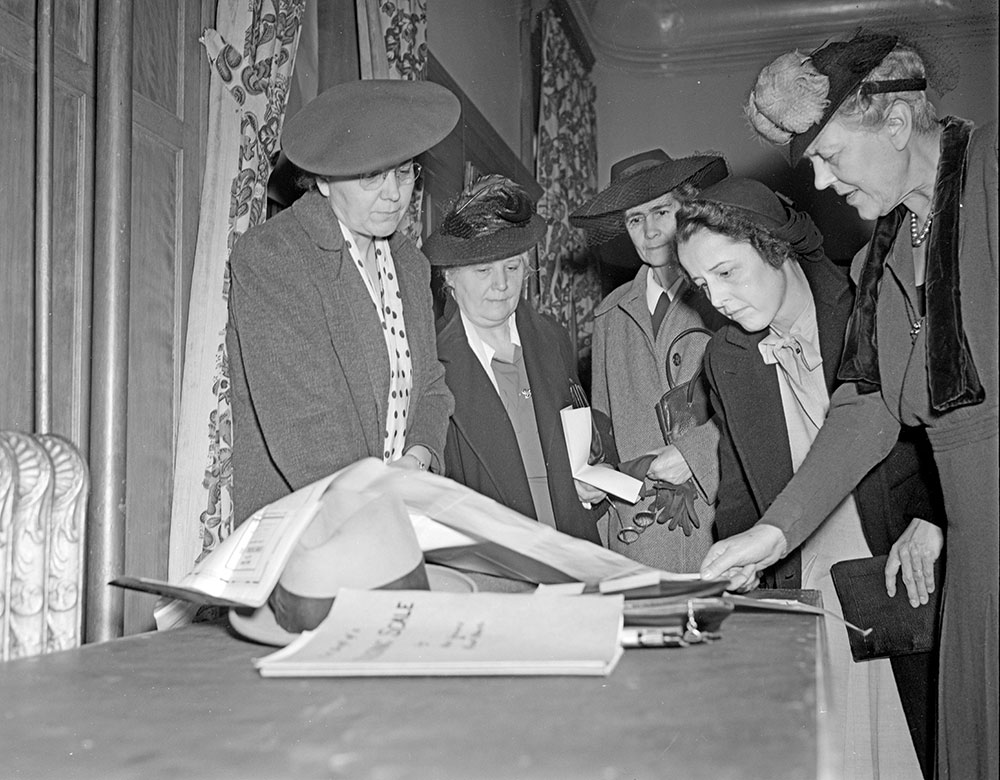
Florence ran for a third term in 1932 but was defeated by Lynn Sieberns, the Democratic candidate. This loss has been attributed to the death of her mother at a critical time during her campaign, as well as waning national support for Republican candidates in the early years of the Great Depression. Never one to dwell on defeat, Florence immediately reconstituted the Florence Fifer Bohrer Club into a new McLean County branch of the League of Women Voters. She served one year as its president, then was elected to a term on the board of the national organization in 1936. Meanwhile, she also volunteered as chairman of the McLean County Emergency Relief Commission, doling out hardship assistance funds and material supports to some 15,000 out-of-work laborers and their families during the darkest days of the Great Depression. Between 1941 and 1946 Florence served two terms as president of the Illinois League of Women Voters, a position she leveraged to lobby her old colleagues in Springfield to vote for, among other things, bills that would reform adoption and children’s aid laws, provide for permanent voter registration, and make the wartime Fair Employment Practice Committee permanent.
Florence’s daughter Gertrude died on February 2, 1945 at the age of 43 following six months of acute illness – likely the final attack of the tuberculosis infection she had been battling since the age of 9. Tragically, tuberculosis had been cured for the first time via the administration of the newly discovered antibiotic streptomycin less than three months previously. Prior to her final illness, Gertrude had spent the past four years teaching secretarial practice on the faculty of Illinois Wesleyan University. In December 1945 Florence and her surviving son Joseph established a scholarship there in Gertrude’s honor, intending it to be awarded annually to the student “who has shown the most ability, intelligent interest, promise or scholarship in the field of government.” 13Footnote
During the final decade of her life, Florence continued advocating for reforms in state and local government, including the ratification of a new state constitution, reapportionment of Illinois legislative districts, and adoption of a city manager system in Bloomington. She served for a time as president of the congregation at Bloomington’s Unitarian Church and chairperson of the Illinois Displaced Persons Commission’s New Americans Committee. During her scant down time, she continued to enjoy riding horses, playing canasta, and spending time with her beloved granddaughters, Judith and Ann. Upon Florence’ death at the age of 83, her biographer Violette Sealock summarized her character as one who “stood courageously for whatever she believed to be right, regardless of race or creed. The underdog was given the benefit of the doubt always.” 14Footnote
Footnotes
-
Personal interview with Florence Fifer Bohrer, approximately April 1951- March 1952, Florence Fifer Bohrer Papers (IAI-20XX-062a), box 1, folder 90, Dr. Jo Ann Rayfield Archives, Normal, Illinois, https://digital.library.illinoisstate.edu/digital/collection/bohrer/id/683/rec/2.
-
Florence Fifer Bohrer, “The Unitarian Hillside Home School,” Wisconsin Magazine of History 38, no. 3 (1955): 154, https://digital.library.illinoisstate.edu/digital/collection/bohrer/id/174/rec/3.
-
Lola DeVore, “The Life of Florence Fifer Bohrer: Illinois' First Woman Senator,” Journal of the Illinois State Historical Society 93, no. 3 (2000): 311, https://web.archive.org/web/20100708124629/http://dig.lib.niu.edu/ISHS/ishs-2000autumn/ishs-2000autumn304.pdf.
-
Martha Middleton, “No special praise for the lady, please,” The Sunday Pantagraph (Bloomington, Ill.), July 4, 1976, https://www.newspapers.com/article/the-pantagraph-florence-fifer-bohrer-bio/206506291/.
-
The McLean County League of Women Voters, Woman of action, model for the future (1963), 3, https://digital.library.illinoisstate.edu/digital/collection/bohrer/id/1509/rec/2.
-
DeVore, 314.
-
DeVore, 316.
-
Florence Fifer Bohrer, History of the Dance Hall Bill, January 13, 1926, Florence Fifer Bohrer Papers (IAI-20XX-062a), box 1, folder 2, Dr. Jo Ann Rayfield Archives, Normal, Illinois, https://digital.library.illinoisstate.edu/digital/collection/bohrer/id/1051/rec/2.
-
Caroline Avis, “One Way with Dance-Halls,” Woman Citizen 10, no. 13 (April 1926): 18.
-
Florence Fifer Bohrer, “Why women are concerned with government,” ca. 1932-1933, Florence Fifer Bohrer Papers (IAI-20XX-062a), box 1, folder 29, Dr. Jo Ann Rayfield Archives, Normal, Illinois, https://digital.library.illinoisstate.edu/digital/collection/bohrer/id/1237/rec/1.
-
DeVore, 319.
-
McLean County League of Women Voters, 6.
-
Scholarship Fund Gives $200 Prize Annual at IWU,” The Pantagraph, Dec. 18, 1945. https://www.newspapers.com/article/the-pantagraph-gertrude-bohrer-scholarsh/207643255/.
-
Violette Sealock, “Mrs. Bohrer’s Philosophy Explained,” The Pantagraph, Aug. 9, 1960. https://www.newspapers.com/article/the-pantagraph-mrs-bohrers-philosophy/207655428/.